
 en
en ro
roI sincerely hope you’re here as a precaution and not because your motorcycle refuses to start. But if you do happen to be stranded and need a quick solution, you’ve come to the right place!
Before anything else, we need to understand why a motorcycle, or even a car, can end up with a “dead battery.” Technically speaking, the battery is still there, but its voltage is too low to crank the engine. Without diving too deeply into mechanics, it’s important to understand how this system works, why it’s crucial, and why almost every motorcycle has one (we’ll also discuss why some models don’t use batteries at all).
First of all, vehicles use rechargeable batteries, not disposable batteries. These store electrical energy for moments when the engine is off and the stator is not generating electricity. When you press the starter button, electrical energy is drawn from the battery and sent to the starter motor.
The starter motor is usually connected to the crankshaft and simulates engine rotation at a low speed, allowing the engine to start. Or, as many riders like to say, it “turns the engine over.”
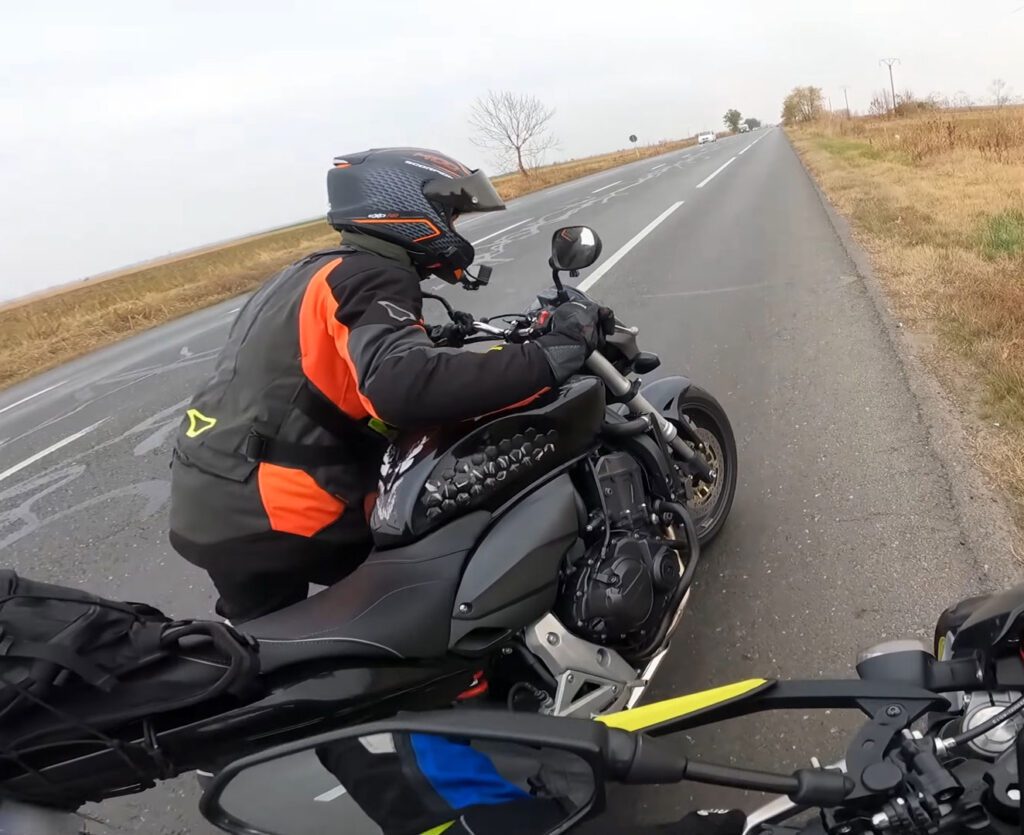
In practice, the engine begins rotating until it reaches the optimal air-fuel mixture. Combustion then occurs, and the engine starts running on its own. But what do you do when your motorcycle battery no longer has enough voltage? And how do situations like this happen in the first place? There are several possible causes, but I’ll share some of the most common ones.
First, battery aging and efficiency loss. As time passes, a battery gradually loses its ability to store its maximum charge. Eventually, it may no longer have enough power to crank your motorcycle’s engine.
Secondly, you may have electrical consumers you don’t know about, or simply forgot about. This could be a headlight left on, parking lights, a phone charging, heated grips, or other accessories that continue drawing power without you realizing it. Basically, any electrical component that consumes power while the motorcycle is turned off can eventually drain the battery, depending on how long it’s left in that state.
Another possibility is a short circuit. This can occur when positive wires come into contact with negative wires or with the frame itself (which is connected to the negative terminal). In such cases, electrical energy can be lost, and more importantly, these issues can even cause accidental fires. It’s definitely not something to ignore.
Or perhaps the motorcycle hasn’t been started in a long time, lacks fuel, air, or spark, and you keep trying to start it anyway. The starting process consumes a significant amount of power, and after several attempts, you’ll notice the engine cranking more slowly until it eventually stops turning altogether.
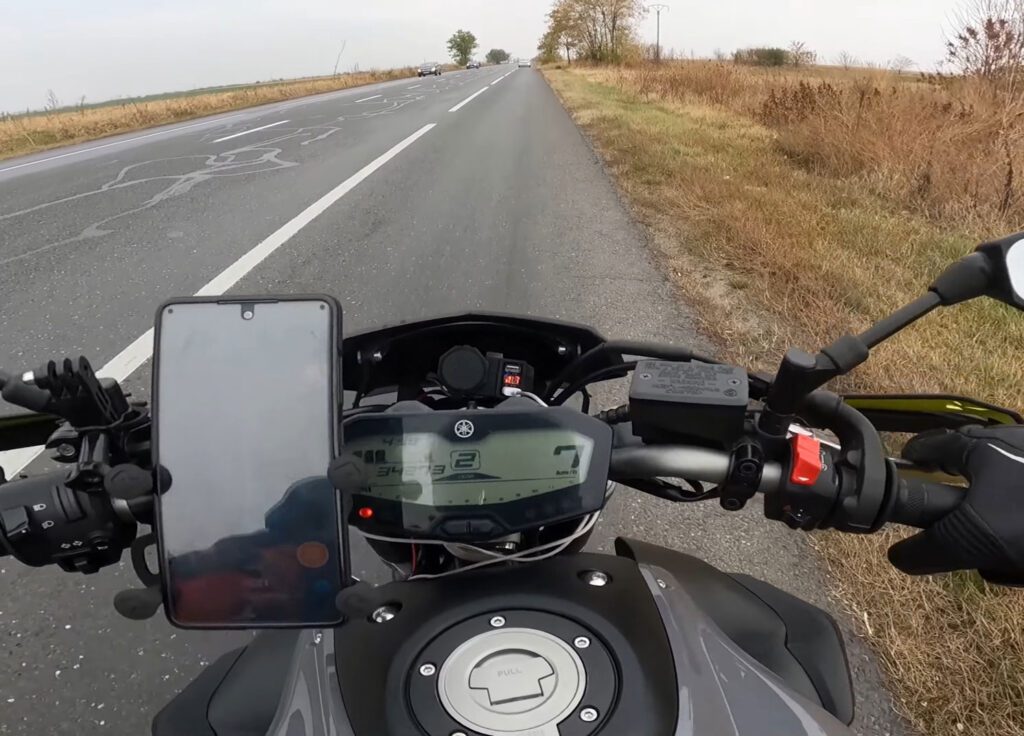
Now that we’ve covered the reasons why this unpleasant situation can occur, it’s time to learn how to solve it temporarily—at least until you get home. Just like the starter motor, we need to find another way to spin the engine at a sufficient speed to force it to start.
- Step 1: Make sure the motorcycle is ready to start. Turn the ignition on, set the kill switch to ON, and if possible, switch off any unnecessary electrical consumers such as headlights or accessories.
- Step 2: Put the motorcycle in neutral. The motorcycle should ultimately be started in 2nd or 3rd gear, preferably 2nd gear. Never attempt this in 1st gear. Engine braking is simply too strong in first gear, making it very difficult to rotate the engine effectively.
- Step 3: If possible, find a downhill slope. A downhill section makes the process significantly easier because the motorcycle can build and maintain momentum naturally.
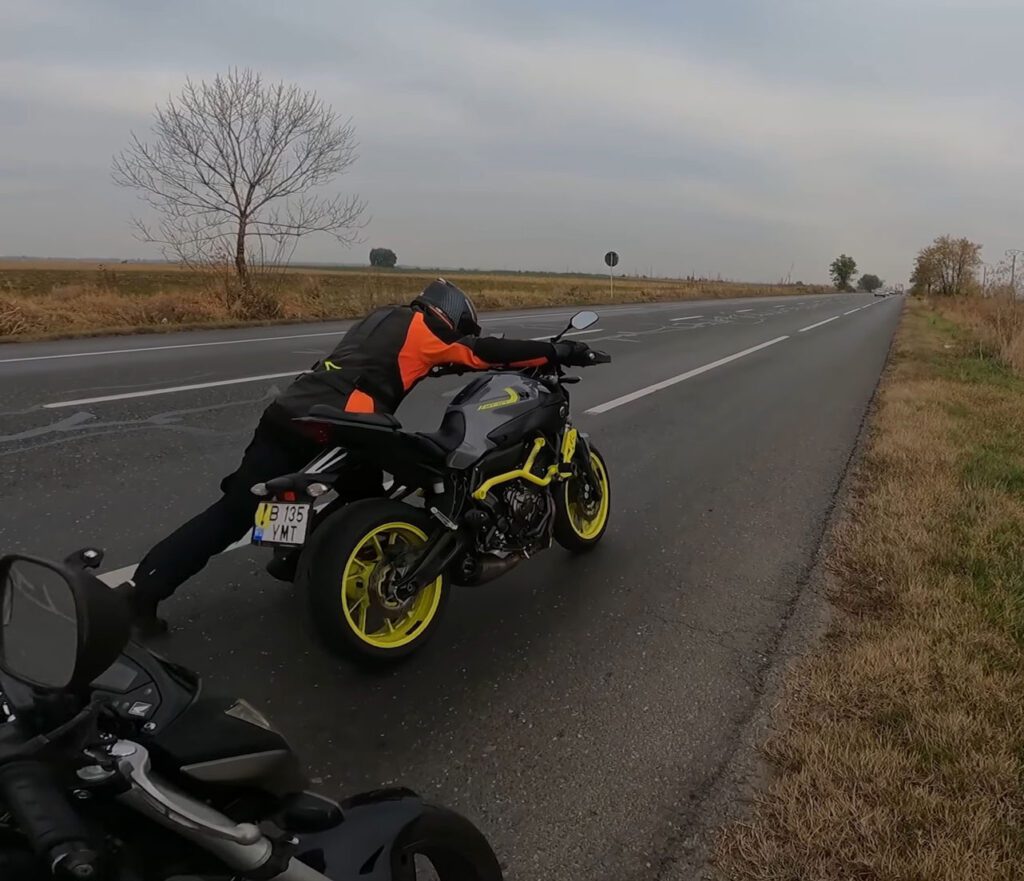
- Step 4: If possible, find someone to help. One person is usually enough, especially if you have a slight downhill slope available. Ask them to push the motorcycle as fast as possible, ideally close to running speed. Friendly advice: don’t recruit elderly people for this task. The attempt may fail, or worse, someone could get injured.
- Step 5: If possible, find a clean, grippy section of pavement. The more traction your rear tire has when you release the clutch, the greater the chances of successfully starting the engine.
-
Step 6(A): If you’ve found a helper, get on the motorcycle and ask them to push you as fast as possible. Once you feel you’ve reached maximum speed and you’re no longer accelerating, pull in the clutch, shift into second gear, tell your helper to let go of the motorcycle, and then release the clutch while simultaneously dropping your weight firmly onto the seat. I recommend having your helper let go before the attempt because it prevents instability and eliminates the risk of them being pulled forward unexpectedly if the motorcycle suddenly starts.
-
Step 6(B): If luck isn’t on your side and you’re alone, don’t worry—we can still make it work. Stand beside the motorcycle and begin pushing it as quickly as possible. Don’t rush immediately; motorcycles are heavy, and the process can feel impossible at first. Give yourself a few meters to build momentum gradually until you reach a speed at which you feel comfortable jumping onto the bike while it’s moving—just like we used to do with bicycles when we were kids. Your final step should be with the foot you’re using to push the motorcycle forward. Then swing your other leg over the seat and, if possible, land directly on the opposite footpeg. For example, if you’re pushing from the left side, your last step on the ground should be with your left foot while your right leg swings over toward the right footpeg.
Once you’re moving at around 10–12 km/h (6–8 mph), pull in the clutch, shift into second gear, and release the clutch abruptly while dropping your weight firmly onto the seat.
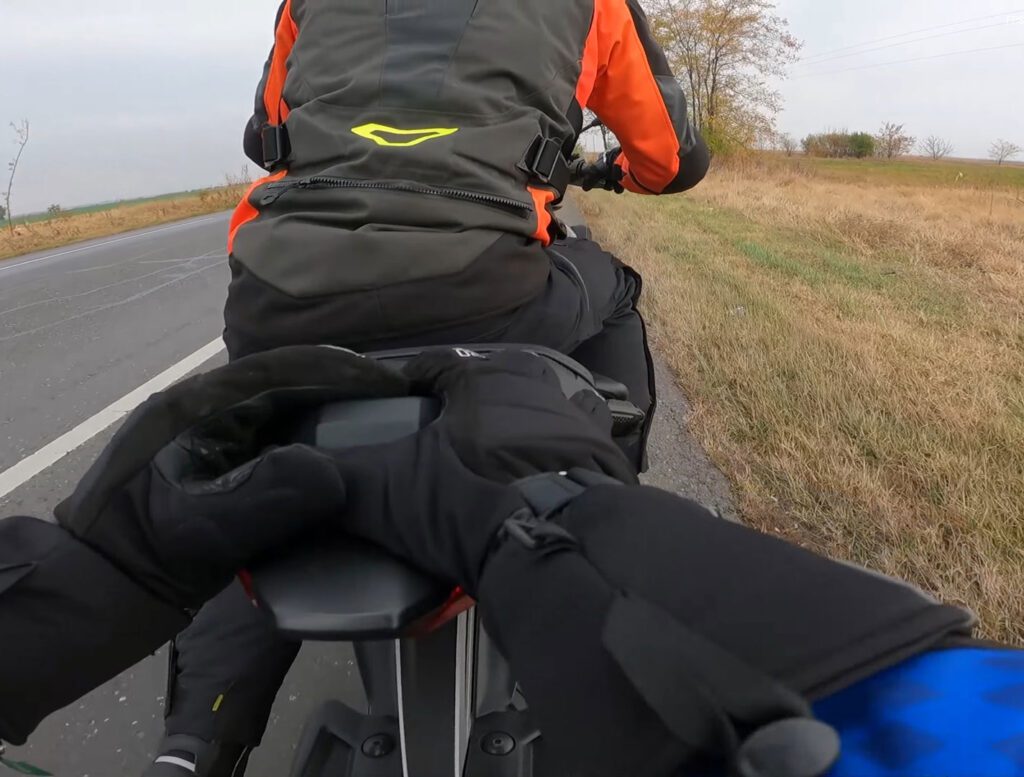
The key is to perform everything as quickly as possible so the motorcycle doesn’t lose momentum. If it doesn’t work the first time, simply repeat the process and try again.
For some motorcycles, especially fuel-injected models—it may be beneficial to turn the ignition off and back on between attempts. This allows the fuel pump to prime the system again. In practice, you switch the ignition off, turn it back on, and return to Step 2. When the clutch is released suddenly, the rear wheel transfers its energy to the engine, causing the crankshaft to rotate and ideally start the motorcycle.
Keep in mind that certain engine configurations, such as single-cylinder, twin-cylinder, and V-twin engines, can be more difficult to bump start than inline four-cylinder engines.
Because of this, some motorcycles may require several attempts. The faster you’re moving before releasing the clutch, the greater the chance of a successful start.
Sometimes you’ll hear the engine turning over without firing, only for it to suddenly come to life a moment later. I always emphasize that dropping your weight onto the seat isn’t some silly trick. It significantly compresses the rear suspension, which increases the load on the rear tire. This causes the tire to deform slightly, creating a larger contact patch with the road surface and therefore increasing traction. I’ve seen many riders do everything correctly except for this small detail. When they released the clutch, the rear wheel simply locked against the pavement, and the engine refused to turn over.
If you follow this advice and keep this detail in mind, you’ll have a very good chance of starting your motorcycle in almost any situation. It may sound complicated when explained in writing, but I promise it isn’t.
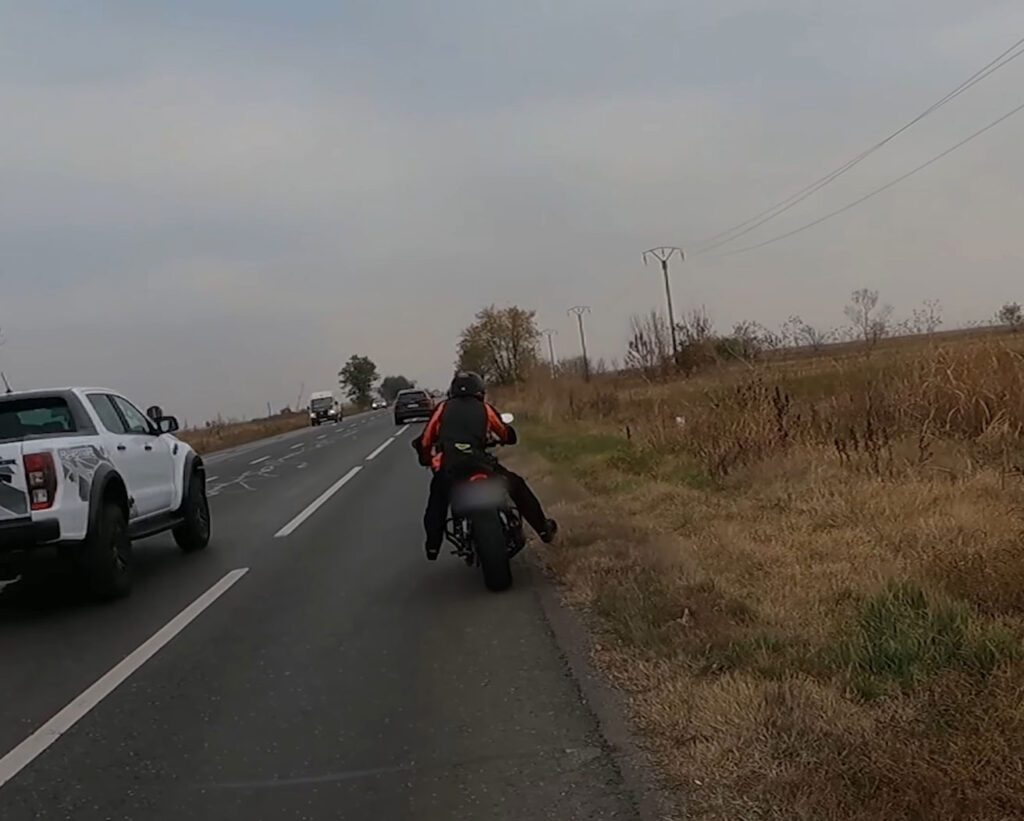
The first two or three attempts are usually the hardest. However, once you learn to synchronize shifting into second gear, releasing the clutch, and dropping your weight onto the seat, the entire process becomes much easier.
Hopefully, you’ll never find yourself in this situation and will only watch the videos and tutorial for entertainment. But now you know that if something similar ever happens, you’ll know exactly where to find the information you need and how to get yourself out of a difficult situation. Before we finish, there are two important things worth mentioning.
The first is that you can jump-start your motorcycle using another motorcycle or a car. However, you’ll need the appropriate jumper cables, and I’m not sure how many riders actually carry those around. It’s certainly easier than pushing the motorcycle, but every time I’ve found myself stranded on the side of the road, I’ve managed without cables by using the method explained above. The second important point is that this method does not work on scooters or motorcycles equipped with a CVT (Continuously Variable Transmission), commonly known as automatic transmissions.
Link video short : https://www.youtube.com/shorts/xMW2yxLL7Ao
Link video explicat : https://www.youtube.com/watch?v=0SZxMHG7-W4


